Louisa May Alcott – Jo’s Boys and How They Turned Out: Books That Killed Their Author
Her health failing, Louisa May Alcott did not stop writing, despite her doctor urging her to rest.
Alcott managed to write – letters as well as stories – up until her death.
For much of her life, Alcott’s health and work ethic were at odds.
“Sick from too hard work,” she wrote in her journal in 1867, a year before “Little Women” was published.
Writing was making her sick. More precisely, the quantity and intensity of her writing were wearing her out as she persevered through serious health problems and the pressures of supporting her family.
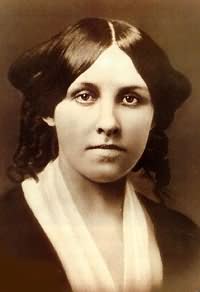
Louisa May Alcott at age 20. Public Domain
Alcott was, and had been, working very hard.
During 1867 alone, Alcott also published “The Abbot’s Ghost, or Maurice Treherne’s Temptation,” under her pen name, A. M. Barnard, a short story collection “Morning-Glories and Other Stories” and the short story “The Skeleton in the Closet”. That year, she also became to top editor at the children’s magazine Merry’s Museum. It was Merry’s Museum’s publisher, Thomas Niles, asked her to write a book especially for girls.
That book would turn out to be “Little Women.”
The same year “Little Women” was published, 1868, Alcott also published four novellas, and a short story that was published anonymously.
Alcott would continue to work hard for the next 18 years.
“Jo’s Boys and How They Turned Out: A Sequel to ‘Little Men’” (1886), was the last of her novels published in Alcott’s lifetime.
Working on “Jo’s Boys“ pushed Alcott’s health from bad to worse.
Alcott commenced work on “Jo’s Boys in” 1882 while living at the Thoreau-Alcott House in Concord, Massachusetts. Dealing with vertigo forced her to stop work on the book. Alcott moved to 10 Louisburg Square in Boston, Massachusetts, in 1885. She finished “Jo’s Boys” by June 1886, and the book was released in October of that year.
She later worried “Jo’s Boys” was not well written because it took so long to complete. Alcott apologies in the preface for the “unevenness” of the writing.
The book received mixed reviews, with some reviewers commenting Alcott’s writing lacked here usual style and that the storyline was “haphazard”.
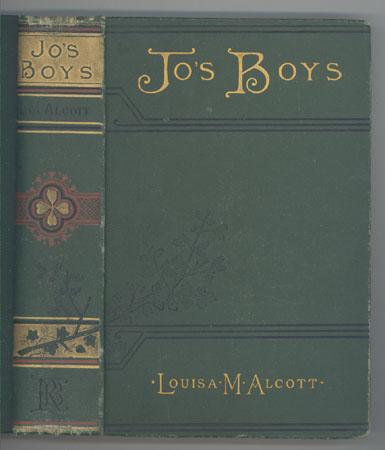
Cover and spine of 1887 edition of Jo’s Boys. Cover and spine of 1887 edition of w:Jo’s Boys
Despite this, Harvard Library Bulletin reported that “Jo’s Boys” had 54 printings and 221,439 copies printed as of 1990, 103 years after its original publication. There are of at least 1,546 different editions of the book, according to Goodreads.com.
Alcott died of a stroke 6 March, 1888, age 55. Two months earlier, she wrote: “I look about 70, grey & wrinkled & bent & lame.” She had been in poor health for two decades and the precise cause of maladies remains a matter of speculation.
https://web.archive.org/web/20080517160545/http://www.startribune.com/lifestyle/health/11345301.html
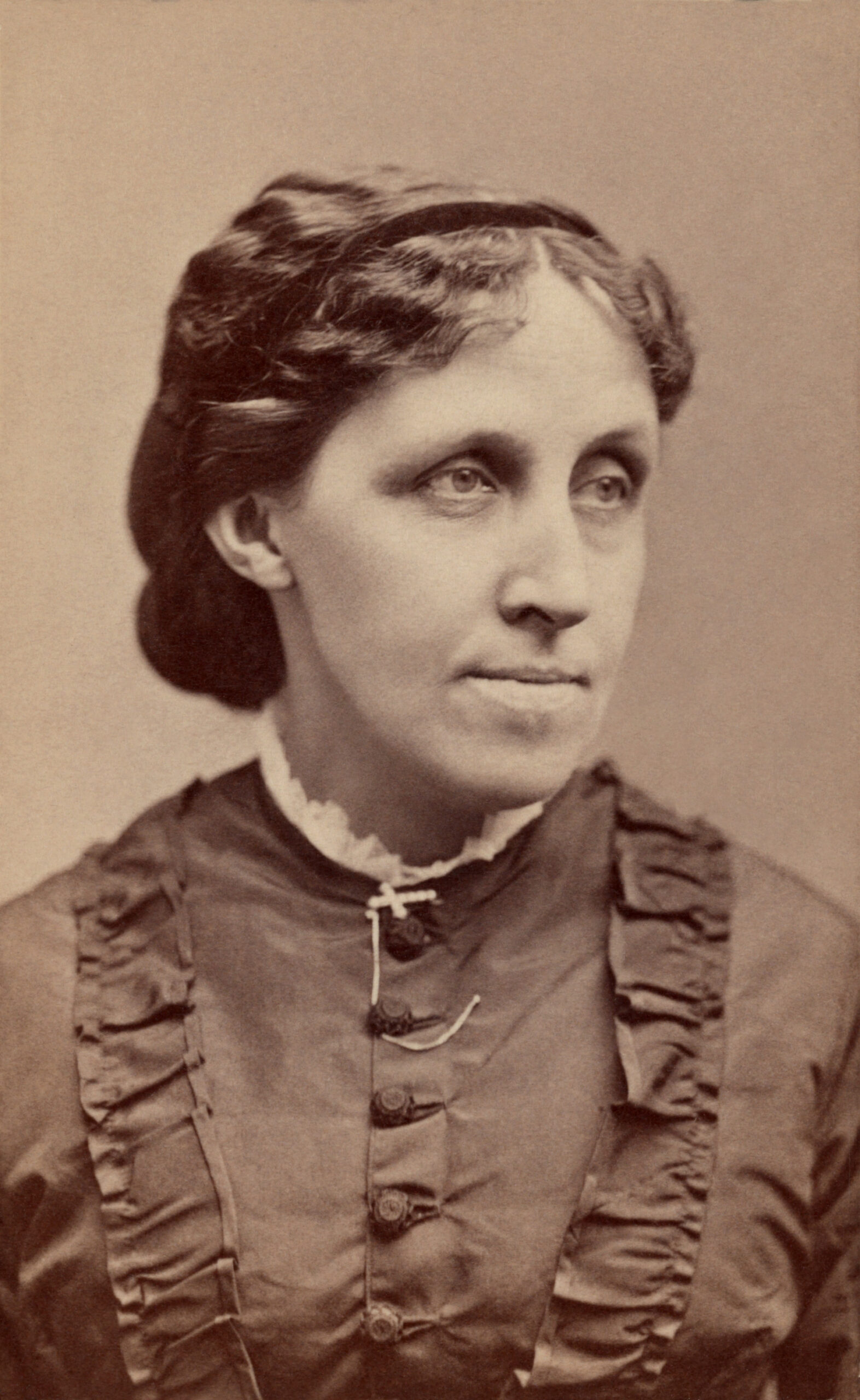
Louisa May Alcott, c. 1870 – Warren’s Portraits, Boston. Library of Congress/Public Domain
Retrospective diagnosis
Retrospective diagnosis – especially diagnosing health issues of long-dead historic figures – is guesswork by definition, especially when you don’t have a corpse to work with. However, that rarely stops historians, especially those with medical training.
Often the problem with retrospective diagnosis is a lack of complete and accurate information.
This isn’t exactly the case with Louisa May Alcott. She left clues. A lot of clues.
Detailed accounts of headaches, vertigo, fatigue, nerve pain, pain in her arms, and digestive problems, filled her letters and journals. Her poor health both drove and hindered her work.
The Alcotts: A Family From The Future
It’s not too a big a surprise that Alcott would become a successful writer, despite the fact the craft was generally considered unladylike in the 1800s.
In many ways, Alcott and her family were like people from the future, especially given the times in which they lived.
She grew up in New England among many well-known intellectuals of the era, raised by her Transcendentalist movement parents, Abigail May and Amos Bronson Alcott.
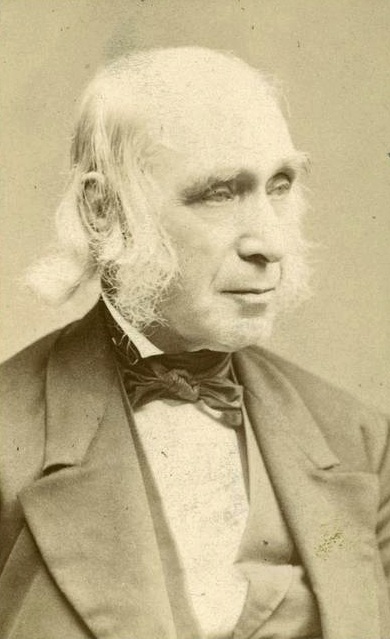
American educator and philosopher Amos Bronson Alcott (1799-1888). From the NYPL Digital Gallery. Public Domain
Her father, Amos Bronson Alcott, known as Bronson, was an idealist, and educator who had very progressive ideas for the time about education, such teaching boys and girls together in the same room with the same curriculum, physical education/recess, and early childhood education. He opposed corporal punishment. He believed in vegetarian/veganism, sustainable living, and temperance/self-control.
Her mother, Abigail May Alcott, was one of the first paid social workers, starting in 1848. She came from a prominent New England family. She was a suffragist and an activist for the temperance movement, the poor, and the abolition of slavery.
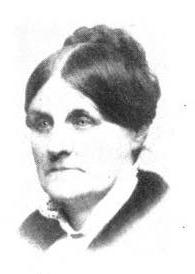
Abigail May, wife of Amos Bronson Alcott and mother of Louisa May Alcott. Sketched from a daguerreotype. From Bronson Alcott’s Fruitlands by Clara Endicott Sears. 1915. Public Domain
Together her mother and father were part of the Underground Railroad helping escaped slaves before the civil war and the abolition of slavery.
Her parent’s’ friends included Margaret Fuller, Ralph Waldo Emerson, Nathaniel Hawthorne, and Henry David Thoreau.
Louisa May Alcott’s Sisters: The Little Women
Anna Bronson Alcott Pratt (March 16, 1831 – July 17, 1893) was Louisa May Alcott’s elder sister. She was the basis for the character Margaret, “Meg”, in “Little Women”.
From an early age, Anna was “stage-struck” and longed “to shine before the world as a great actress or prima donna.” In 1858, Louisa May and Anna helped form the Concord Dramatic Union. Another member of the group was John Bridge Pratt. Pratt and Anna fell in love while playing opposite each other in a play called “The Loan of a Lover.” He inspired the fictional character John Brooke in “Little Women”.
The couple married in May 1860. Their wedding was the basis for the fictional marriage of Meg and John in “Little Women”. Their wedding guests included Henry David Thoreau, Ralph Waldo Emerson, Lidian Jackson Emerson and Franklin Benjamin Sanborn.
Anna and John had two sons: Frederick Alcott Pratt (1863–1910) and John Sewall Pratt (1865–1923). Both worked in book publishing.
John Bridge Pratt died unexpectedly in late 1870.
After her husband’s death Anna purchased the Thoreau-Alcott House on Main Street in Concord, Massachusetts, in 1877 with help from her sister Louisa.
Anna died in Concord, Massachusetts, on 17 July 1893. She was buried in the family plot on Author’s Ridge in Sleepy Hollow Cemetery, Concord.
Elizabeth Sewall Alcott (June 24, 1835 – March 14, 1858) was one of the two younger sisters of Louisa May Alcott. She was born in 1835. She died, age 22, from scarlet fever.
She was the basis for Beth in “Little Women”.
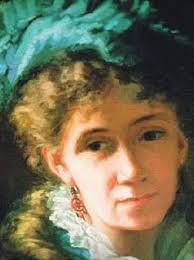
Portrait of May Alcott Nieriker by Rose Peckman. Public Domain
Abigail May Alcott Nieriker (July 26, 1840 – December 29, 1879), known as May, was an American artist and the youngest sister of Louisa May Alcott. She was the basis for the character Amy.
Beginning in 1859, May studied art at the School of the Museum of Fine Arts in Boston. May Alcott visited Paris and studied at the Académie Julian in 1870.
She studied in Paris, London, and Rome during three European trips in 1870, 1873 and 1877, made possible by the success of “Little Women”. Alcott illustrated the first edition of Little Women.
In 1877, a still life by May was the only painting by an American woman exhibited in the Paris Salon, selected over the work of Mary Cassatt.
May was living in London when she met Ernest Nieriker. The couple married on 22 March 1878, in London.
On 8 November 1879, May gave birth to a daughter, Louisa May “Lulu” Nieriker, in Paris. May died on 29 December 1879 of complications from childbirth. May asked that Louisa May raise Lulu, which Louisa did until her death in 1888. After Louisa’s death, Ernest Nieriker, Lulu’s father, took Lulu back to Europe and she was raised in Zurich, Switzerland.
May was buried in Paris.
Writing Her Way Out Of Poverty
Alcott’s parents encouraged her writing, but she began writing professionally when financial pressure on her family grew. Being Transcendentalist intellectuals never paid well. “The Rival Painters: A Tale of Rome,” Alcott’s first story for which she was paid, appeared in May 1852 in the weekly paper, The Boston Olive Branch. She made $5 and the story was published anonymously.
Alcott was determined to lift her family out of poverty. Writing was the vehicle that made her goal come true. When she was 11, Alcott wrote, “I wish I was rich, I was good, and we were all a happy family this day.”
“Louisa made herself a brand,” author and Alcott scholar Harriet Reisen, told National Public Radio’s Linda Wertheimer on the program Morning Edition in 2009. “She suppressed the fact that she had written pulp fiction that included stories about spies and transvestites and drug takers.”
Civil War Nurse
An abolitionist, temperance advocate, and feminist, Alcott wanted to enlist in the Union Army when the American Civil War began in 1861. The obstacle to army enlistment was that she was a woman. The best she could do was sign up work as an army nurse. However, the minimum age for army nurses was 30. She was 29.
Instead, she sewed uniforms and waited for her birthday.
Upon turning 30 on 29 November 1862, Alcott applied to the U. S. Sanitary Commission, which ran military hospitals. On 11 December 1862 she was assigned to the Union Hotel Hospital in Georgetown, Washington, D.C.
Arriving at the hospital, she discovered that conditions were poor, over-crowded and filthy, bad food, beds unstable, and ventilation lacking. Scarlet fever, chicken pox, measles, and typhus were spreading among the patients.
Alcott cleaned and dressed wounds, assisted with amputations, fed patients, and assigned patients to wards. She entertained patients by reading aloud and putting on skits that she created by dramatizing chapters from Charles Dickens books.
She lasted six weeks of a planned three months of nursing service. Alcott contracted typhoid fever and became critically ill. It was this illness that led to a major insult to her health. Her typhoid infection was treated with calomel, a compound containing mercury. Highly poisonous, mercury was a common ingredient in the primitive medications of the mid-1800s.
In late January 1863, Alcott’s father, Bronson, went to the hospital and took her back to Concord to recover.
Mercury Poisoning
Alcott herself later attributed some of her ill health to mercury poisoning.
Physicians Norbert Hirschhorn and Ian Greaves in their 2007 retrospective diagnosis suggest that Alcott’s chronic health problems may have been associated with an autoimmune disease such as lupus that possibly arose because mercury damaged her immune system.
An 1870 portrait of Alcott shows her with flushed cheeks and possibly the butterfly rash characteristic of lupus. Despite Alcott’s extensive journal entries and other written sources, the diagnosis cannot be proved.
“Jo’s Boys”
In early 1886 her health was still poor, but she was eager to complete “Jo’s Boys”, and had many ideas for future works.
“Sleepless nights. Head worked like a steam engine and would no stop. Planned “Joe’s Boys” to end and longed to get up and write it,” she wrote in her diary entry for 27 March.
She wrote that she told Dr. Conrad Wesselkhoeft, a homeopathic physician who had also treated Bronson Alcott, that “he had better let me get the idea out then I could rest.”
She convinced Wesselkhoeft she needed to work. He agreed to let her write 30 minutes a day.
During the middle months of 1886, Alcott felt better, especially when she could work “when I forget my body and lived in my mind.”
She wrote an hour or two a day. By June she completed 15 chapters and sent them off to her publisher, Thomas Niles. By July, the book was done. It was her first completed novel on seven years.
In the latter half of 1886, not long after she completed the manuscript for “Jos’s Boys”, Alcott’s illnesses returned after a few months of feeling better. According to biographer Martha Saxton, Alcott blamed the relapse in part on “everlasting home cares”. She had kept the family stitched together for years and began thinking her health would improve with fewer day-to-day duties.
She was very sick through the fall and winter of 1886.
Her health again declining, at the end of January 1887 Alcott began living at Dunreath Place, a convalescent home run by another homeopathic physician, Dr. Rhoda Lawrence. Alcott had contributed money to establish Dunreath Place, which was located in Boston’s Roxbury neighborhood.
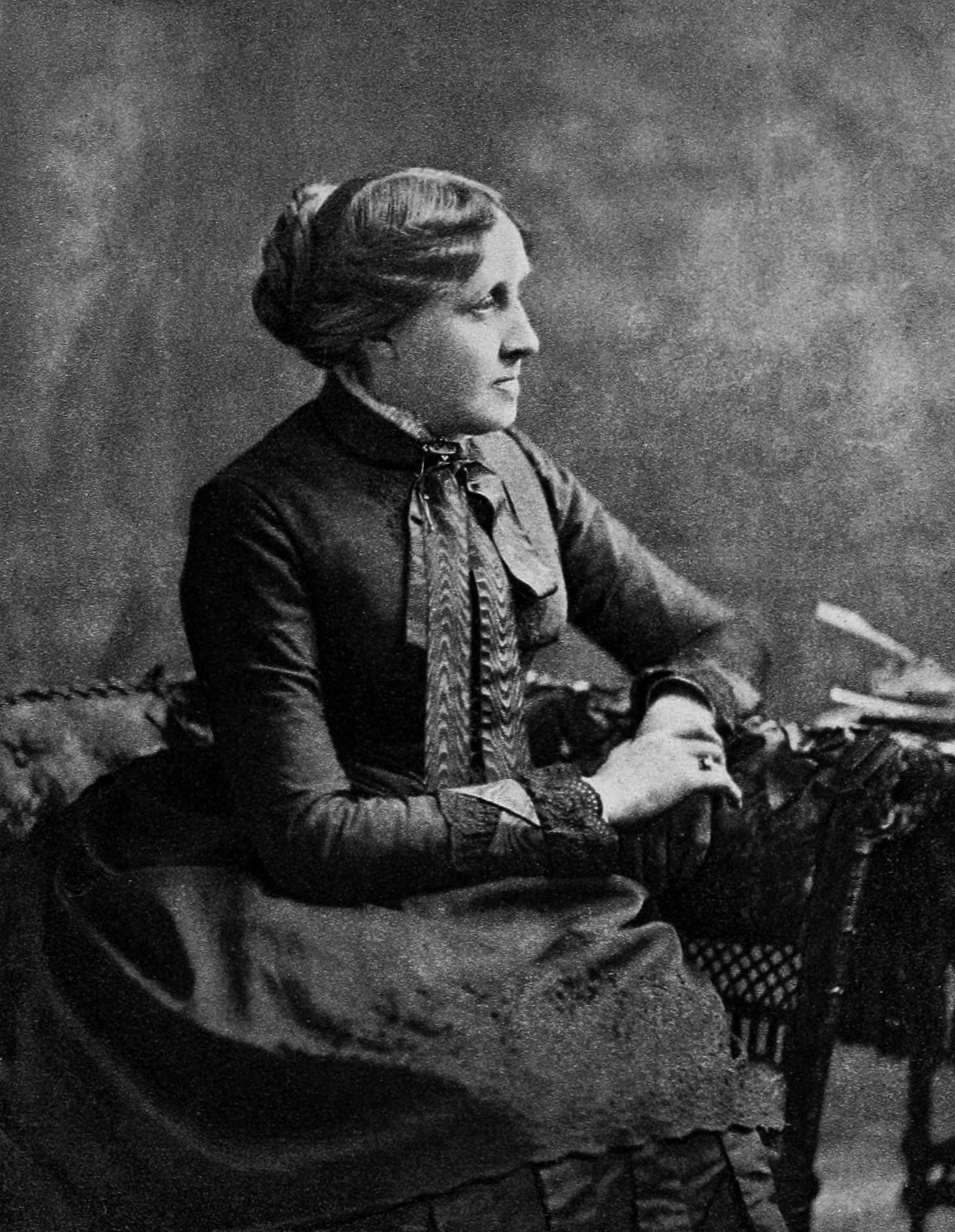
Louisa May Alcott
Alcott’s final journal entries, 1888:
February 24
Fine. Lonely day. Go into 10 & see A[nna]. Papa very much changed. So old & wasted & weak. A mere wreck of the beautiful old man. Sorry he did not slip away sooner. Hate to see him linger so. Rested 2 hours. Saw T. N[iles] & boys. Got books. Sewed. Not tired. Head better.
Notations:
10 = 10 Louisburg Square in Boston, Massachusetts, where Alcott, her sister, and father moved to in 1885. Alcott would later move into Dunreath Place. Anna is Anna Bronson Alcott Pratt, her older sister and the basis for Margaret “Meg”, of Little Women. Anna’s husband, John Bridge Pratt, had died in 1870, and was the basis for the character John Brooke.
After Alcott moved into Dunreath Place, she frequently visited Louisburg Square.
Anna was nursing their bedridden father, Bronson, at the Louisburg Square house as he was dying.
T. Niles is Thomas Niles, her publisher.
It seems odd Alcott would call this a “lonely day” in this diary entry.
February 25
[blank]
February 26
Two town & saw F[red] & J[essica] & the wedding things. Very pretty. Rested & wrote letters & knit. Dr read.
February 27
Fine. Wrote on “Sylvester”. Paid Miss Joy $100. Walked to store & was weighed. 113 pds. 136 last Sept. Lost 23 pds in six months. Now we will see how much I gain in the next 6. Cut out night gowns for my poor baby.
Notations:
“Sylvester” is a short story that, according to the editors of her journals, cannot be located.
Serious stomach problems were among Alcott’s chronic medical issues. At times her doctors warned her she had to eat no matter how bad she felt or she would die.
In September 1887, Alcott wrote in her journal that she felt “the end was near.” At other times, such as when she moved into Dunreath Place, she foresaw herself living another 20 years if she could get proper rest. It’s obvious here she was thinking at least six more months into the future.
Alcott was making clothes for the baby or a poor family.
February 28
Sew, write letters & Dr reads. Dull & blue. Food not right.
February 29
Cold. Blue. Read a little. Write on Lu Sing an hour. Sew. Sens A[nna] $200 for house.
Notations:
Lu Sing was a fictional Chinese version of Lulu written for the “LuLu’s Library” series, which was published from 1886 to 1889. The story appeared in 1902 in the children’s magazine St. Nicholas with an introduction by Frederick Pratt, her nephew and sister Anna’s son.
https://louisamayalcottismypassion.com/2010/12/17/stories-by-louisa-may-alcott-in-st-nicholas-magazine/
March 1
Fine. In to see Papa. Very sweet & feeble. Kissed me and said ”Come soon”. Smelt my flowers & asked me to write him a letter. Nearly gone. A[nna] vert dear. Jess came in for a moment. Met Mrs. P[orter]. Saw “Leif” on the way home.
Pay rent. 375.00
Dr. L[awrence] 51.20
Milk. Mrs. D[aniels] 2.32
Hack 29.30
Notations:
This would be the last time Alcott would see her father. The account in her diary of her last meeting with her father differs from the somewhat metaphysical story told after her death.
The often repeated story of her last visit with her father is this:
“Father,” she said, “Here is your Louy. What are you thinking of as you lie there so happily?” He pointed toward Heaven and answered, “I am going up. Come with me.”
“Oh, I wish I could,” she said.
In the journal entry cited above Alcott wrote only that her father said ”Come soon”.
Her father would be buried one day before Louisa May. A double funeral for the father and daughter took place 8 March at the home at 10 Louisburg Square.
Mrs. P[orter] is abolitionist and feminist Maria S. Porter, a friend of Alcott’s during the last 20 years of her life. Porter was the last person, outside her family, to visit Alcott before she died. Porter was also the recipient of the last letter Alcott wrote.
Porter’s account of her last meeting with Alcott:
“On Thursday morning, March 2, I chanced to be at the house, where I had gone to inquire for Mr. Alcott and Louisa. While talking with Mrs. Pratt, her sister, the door opened, and Louisa, who had come in from the Highlands to see her father, entered. I had not seen her for months, and the sight of her thin, wan face and sad look shocked me, and I felt for the first time that she was hopelessly ill. After a few affectionate words of greeting she passed through the open doors of the next room.” Recollections of Louisa May Alcott, John Greenleaf Whittier, and Robert Browning: Together with Several Memorial Poems (pgs. 27-28)
https://archive.org/details/recollectionslo01portgoog
The last letter written by Louisa (probably on 3 March) was to Porter in response to a photograph of her deceased sister May (Lulu’s mother) that Porter had sent her.
“Dear Mrs. Porter,
Thanks for the picture. I am very glad to have it. No philosophy is needed for the impending event. I shall be very glad when the dear old man falls asleep after his long and innocent life. Sorrow has no place at such times, and death is never terrible when it comes as now in the likeness of a friend.
Yours truly,
L. M. A.
P. S. I have another year to stay in my ‘Saint’s Rest,’ [her name for Dunreath Place] and then I am promised twenty years of health. I don’t want so many, and I have no idea I shall see them. But as I don’t live for myself, I hold on for others, and shall find time to die some day, I hope.” (Recollections of Louisa May Alcott, John Greenleaf Whittier, and Robert Browning: Together with Several Memorial Poems pg. 28)
In the P.S. we see that Alcott was thinking of a future when he health improved.
Hack = hackney carriage. The $29.30 is essentially her cab fare charge, probably for the entire month of February.
March 2
Fine. Better in mind but food a little uneasy. Write letters. Pay Ropes $30. Write a little. L[ulu] to come.
Death and Legacy
On 3 March Louisa May Alcott had a stroke and went into a coma, remaining unconscious until her death on 6 March. Her father died 4 March.
Biographer Harriet Reisen wrote that by Alcott’s bedside when she died were her pen – she has been writing – and a sewing needle, threaded in red. Alcott was making a flannel dress for the baby of a poor family.
Alcott never married, but was dedicated to caring for her parents, sisters and community.
As the end of her life neared, Alcott acted to secure her family’s finances.
Alcott legally adopted Anna’s younger son, John Pratt, in 1887 making him heir to her royalties. John Pratt changed his name to John Alcott upon his adoption. John and his brother, Frederick Alcott Pratt, both worked in publishing. She wrote a will that left her money to her remaining family.
You don’t get much more transcendental than having your work touch the future. Louisa May Alcott accomplished that. Alcott remains one of America’s most admired writers.
A tremendous amount of scholarship documents and analyzes her life and work. She is treasured by readers today. Many writers cite her as an influence including Ursula K. Le Guin, Barbara Kingsolver, Gail Mazur, Anna Quindlen, bell hooks, Anne Lamott, Sonia Sanchez, Ann Petry, Gertrude Stein, Simone de Beauvoir, and Patti Smith.
Interest in her writing is such that several works were published after her death, including through the 20th century and into the 21st (“The Brownie and the Princess”, 2004).
Louisa May Alcott and her life have even become the subject of works of fiction. She is the crime-solving the protagonist in the “Louisa May Alcott Mystery” series, written by Jeanne Mackin under the pseudonym Anna Maclean. “The Lost Summer of Louisa May Alcott” by Kelly O’Connor McNees has Alcott finding and then spurning romance to pursue writing. In “Only Gossip Prospers” by Lorraine Tosiello, Alcott visits New York City shortly after publishing Little Women. In “The Revelation of Louisa May Alcott” by Michaela MacColl a young Alcott solves a slave catcher’s murder.
As recently as 2023, scholars were still tackling down previously unknown Alcott pen names and stories.
Max L. Chapnick, now an Assistant Professor of English at Saint Mary’s College, tracked down circumstantial evidence that Alcott used the name Gould (with a first initials of either E.H. or I.H.) on a story called “The Phantom” that appeared in March 1860 in the Boston Olive Branch. It’s known that Alcott wrote under a few pseudonyms including Tribulation Periwinkle and Flora Fairfield.
https://muse.jhu.edu/article/909302/figure/img01
It wasn’t known until the 1940s that Alcott penned four novels under the name A.M. Barnard, including a thriller, “A Long Fatal Love Chase,” written in 1866 but not published until 1995.
Writing in The Conversation, an online academic publication, Chapnick said that he had “found several other pieces that were written by Alcott or had likely been written by her,” and speculated that there are more Alcott stories still to be discovered.
https://muse.jhu.edu/article/909300
“Are there any other Alcott stories that remain unidentified?” Chapnick wrote. “I would say there almost certainly are. As to whether Alcott used any pseudonyms in addition to the ones that have been identified, that’s less likely but possible.”
That Alcott produced so many works in so many genres and styles is a testament to how hard she worked at writing and that her writing would contribute to her demise.
Louisa May Alcott is buried in Sleepy Hollow Cemetery in Concord, Massachusetts, at the feet of her parent’s graves, as she requested so she could serve them in death as she had in life. Nearby are the graves Emerson, Hawthorne, and Thoreau, on a hillside in Sleepy Hollow now known as Authors’ Ridge.
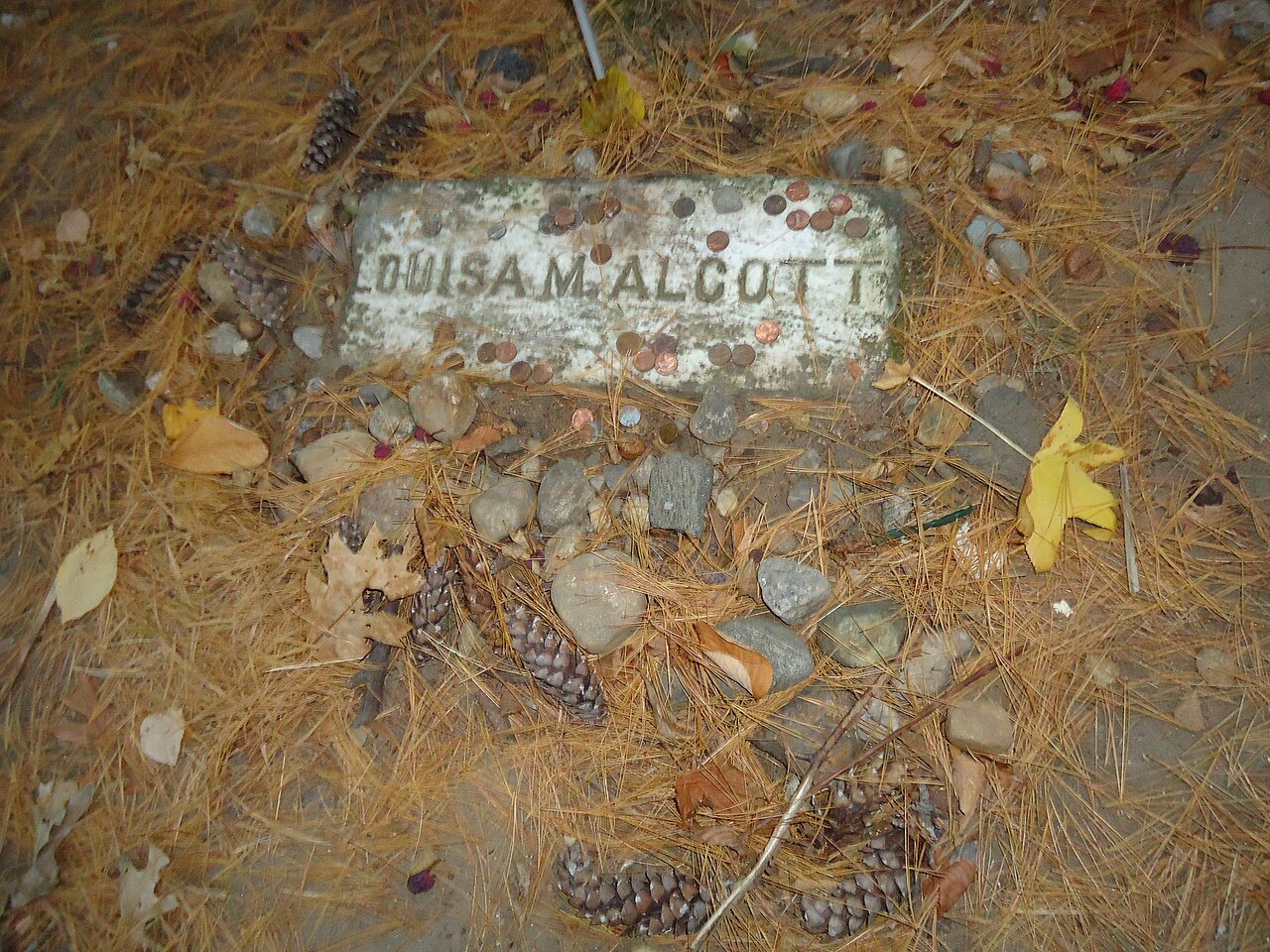
Louisa May Alcott’s grave in Sleepy Hollow Cemetery, Concord, Massachusetts. Tomwsulcer – Own work/Creative Commons
Louisa May Alcott Books in Order
Louisa May Alcott is a series of 95 books written by Louisa May Alcott.
This site has amazon links. I have no affiliation with amazon or this site.
https://mostrecommendedbooks.com/series/louisa-may-alcott-books-in-order
The Little Women Tetralogy
Little Women, or Meg, Jo, Beth and Amy (1868)
Good Wives (1869)
Little Men: Life at Plumfield with Jo’s Boys (1871)
Jo’s Boys and How They Turned Out: A Sequel to “Little Men” (1886)
Novels
The Inheritance (1849, unpublished until 1997)
Moods (1865, revised 1882)
An Old Fashioned Girl (1869)
Will’s Wonder Book (1870)
Work: A Story of Experience (1873)
Beginning Again, Being a Continuation of Work (1875)
Eight Cousins, or The Aunt Hill (1875)
Rose in Bloom: A Sequel to Eight Cousins (1876)
Under the Lilacs (1878)
Jack and Jill: A Village Story (1880)
As A. M. Barnard
A Marble Woman; or, The Mysterious Model (1865)
Behind a Mask, or a Woman’s Power (1866)
The Abbot’s Ghost, or Maurice Treherne’s Temptation (1867)
A Long Fatal Love Chase (1866; first published 1995)
Published anonymously
A Pair of Eyes, or Modern Magic (1863)
A Modern Mephistopheles (1877)
Novellas
Hospital Sketches (1863)
Pauline’s Passion and Punishment (1863)
My Contraband, first published as The Brothers (1863)
A Whisper in the Dark (1863)
The Freak of a Genius (1866)
The Mysterious Key and What It Opened (1867)
La Jeune; or, Actress and Woman (1868)
Countess Varazoff (1868)
The Romance of a Bouquet (1868)
A Laugh and A Look (1868)
Transcendental Wild Oats (1873)
Silver Pitchers, and Independence: A Centennial Love Story (1876)
The Fate of the Forrests
A Double Tragedy: An Actor’s Story
Ariel, A Legend of the Lighthouse
A Nurse’s Story
May Flowers
As A. M. Barnard
V.V.: or, Plots and Counterplots (1865)
Short story collections
Flower Fables (1854)
On Picket Duty, and other tales (1864)
Morning-Glories and Other Stories (1867)
Kitty’s Class Day and Other Stories (Three Proverb Stories) (1868)
Aunt Jo’s Scrap-Bag (1872–1882). (66 short stories in six volumes)
1. “Aunt Jo’s Scrap-Bag”
2. “Shawl-Straps”
3. “Cupid and Chow-Chow”
4. “My Girls, Etc.”
5. “Jimmy’s Cruise in the Pinafore, Etc.”
6. “An Old-Fashioned Thanksgiving, Etc.”
Proverb Stories (1882)
Spinning-Wheel Stories (1884)
Lulu’s Library (1886–1889)
A Garland for Girls (1887)
Short stories
“The Rival Painters: A Tale of Rome” (1852)
“Love and Self-Love” (1860)
“Enigmas” (1864)
“The Skeleton in the Closet” (1867)
“My Mysterious Mademoiselle” (1869)
“Lost in a Pyramid; or, The Mummy’s Curse” (1869)
“Perilous Play” (1876)
“The Candy Country” (1885)
“Which Wins?”
“Honor’s Fortune”
“Mrs. Vane’s Charade”
Published anonymously
“Doctor Dorn’s Revenge” (1868)
“Fatal Follies” (1868)
“Taming a Tartar”
“Fate in a Fan”
Poems
“Sunlight” (1851)
“My Kingdom” (written 1845, published 1875)
“The Children’s Song” (written 1860, published 1889)
“Young America” (1861)
“With A Rose That Bloomed on the Day of John Brown’s Martyrdom” (1862)
“Thoreau’s Flute” (1863)
“In the Garret” (1865)
“The Sanitary Fair” (1865)
“Come, Butter, Come” (1867)
“What Shall the Little Children Bring” (1884)
“Oh, the Beautiful Old Story” (1886)
“The Fairy Spring” (1887)
Posthumous works
“Recollections of My Childhood” (1888)
Comic Tragedies (1893)
Morning-Glories and Queen Aster (1904)
Diana and Persis (1978, incomplete manuscript)
Book lists from Wikipedia.
Sources
Books
Anderson, William (1995). The World of Louisa May Alcott: A first-time glimpse into the life and times of Louisa May Alcott, author of “Little Women”. New York: HarperPerennial. ISBN 978-0-06-095156-6.
Cheever, Susan (November 2010). Louisa May Alcott, A Personal Biography. Simon & Schuster. ISBN 978-1-4165-6991-6.
Delamar, Gloria T. (1990). Louisa May Alcott and “Little Women”: Biography, Critique, Publications, Poems, Songs and Contemporary Relevance. McFarland & Company. ISBN 0-89950-421-3.
Elbert, Sarah (1987) [1984]. A Hunger for Home: Louisa May Alcott’s Place in American Culture. Rutgers University Press. ISBN 0-8135-1199-2.
Myerson, Joel; Shealy, Daniel; Stern, Madeleine B. (1989). The Journals of Louisa May Alcott. Little, Brown. ISBN 0-316-59362-1.
Porter, Maria S. Recollections of Louisa May Alcott, John Greenleaf Whittier, and Robert Browning: Together with Several Memorial Poems (1893) Published for the author by the New England magazine Corporation
https://archive.org/details/recollectionslo00portgoog/mode/2up
Reisen, Harriet (2010). Louisa May Alcott: The Woman Behind Little Women (Unabridged ed.). Macmillan + ORM. ISBN 978-1-4299-2881-6.
Saxton, Martha (1977, revised edition 1995). Louisa May Alcott: A Modern Biography. USA: Farrar, Straus and Giroux. ISBN 0374524602.
Shealy, Daniel (March 2011 paperback). Alcott in Her Own Time: A Biographical Chronicle of Her LIfe, Drawn from Recollections, Interviews, and Memoirs by Family, Friends, and Associates. University of Iowa Press. ISBN-139780877459385.
https://uipress.uiowa.edu/books/alcott-her-own-time
Journals
Hirschhorn, Norbert; Greaves, Ian (2007). “Louisa May Alcott: Her Mysterious Illness”. Perspectives in Biology and Medicine. 50 (2): 243–259. doi:10.1353/pbm.2007.0019. PMID 17468541. S2CID 26383085.
Websites
How I Discovered a Likely Pen Name of Louisa May Alcott, By Max Chapnick
An English scholar’s search uncovered several stories likely written by the author of Little Women
https://www.scientificamerican.com/article/louisa-may-alcott-pen-name-uncovered/
Louisa May Alcott: A Resource Guide
The digital collections of the Library of Congress contain a variety of material related to Louisa May Alcott. This guide was created to help researchers discover these materials, as well as other materials in the Library’s broader collections and beyond.
https://guides.loc.gov/louisa-may-alcott-resource-guide
Louisa May Alcott is My Passion, Susan Bailey
https://louisamayalcottismypassion.com/
Louisa May Alcott: The Woman Behind Little Women, Harriet Reisen
https://www.louisamayalcott.net/index.html
Today In History: Louisa May Alcott Publishes Her First Short Story, By Jennifer Govan, 8 May 2025, Gottesman Libraries, Teachers College, Columbia University
https://library.tc.columbia.edu/blog/content/2025/may/today-in-history-louisa-may-alcott-publishes-her-first-short-story.php
“Alcott: ‘Not The Little Woman You Thought She Was'”. NPR. December 29, 2009. https://www.npr.org/2009/12/28/121831612/alcott-not-the-little-woman-you-thought-she-was
The Books that Killed their Authors Series:
John Kennedy Toole – A Confederacy of Dunces: Books That Killed Their Authors #2
Charles Dickens – The Mystery of Edwin Drood: Books That Killed Their Authors #3
Jane Austen – Persuasion and Sanditon: Books That Killed Their Authors #4
Franz Kafka – A Hunger Artist: Books That Killed Their Authors #6
Truman Capote – Answered Prayers: Books That Killed Their Authors #7
Honoré de Balzac – The Human Comedy: Books That Killed Their Authors #8
Harriet Beecher Stowe – Uncle Tom’s Cabin: Books That Killed Their Authors